Project Showcasing on BME 4200: Communication Protocols for Biomedical Instruments Sessional
JUST, 15 April, 2026
The students of 4th Year, 2nd Semester, (4-2) from the Department of Biomedical Engineering at Jashore University of Science and Technology (JUST) successfully organized a project showcasing program as part of their course BME 4200: Communication Protocols for Biomedical Instruments Sessional. The event highlighted the students’ ability to integrate theoretical knowledge with real-world biomedical applications through innovative and impactful projects.
Under the supervision of Dr. Hassan Al Emran, Chairman, BME, and Anika Anjum, Lecturer, BME, the students were divided into three groups, each presenting a unique project addressing current challenges in healthcare technology. The project showcasing program served as a platform for students to demonstrate innovation, teamwork, and practical problem-solving skills. Each project reflected a strong understanding of communication protocols in biomedical systems and their real-world applications in rehabilitation, healthcare accessibility, and telemedicine.
The Department of Biomedical Engineering at JUST continues to encourage such initiatives that bridge the gap between academic learning and societal impact, preparing students to become future leaders in biomedical innovation.
-------------------------------------------------------------------------------------------------------------
1. Development of a Low-Cost SmartRehab Glove Prototype
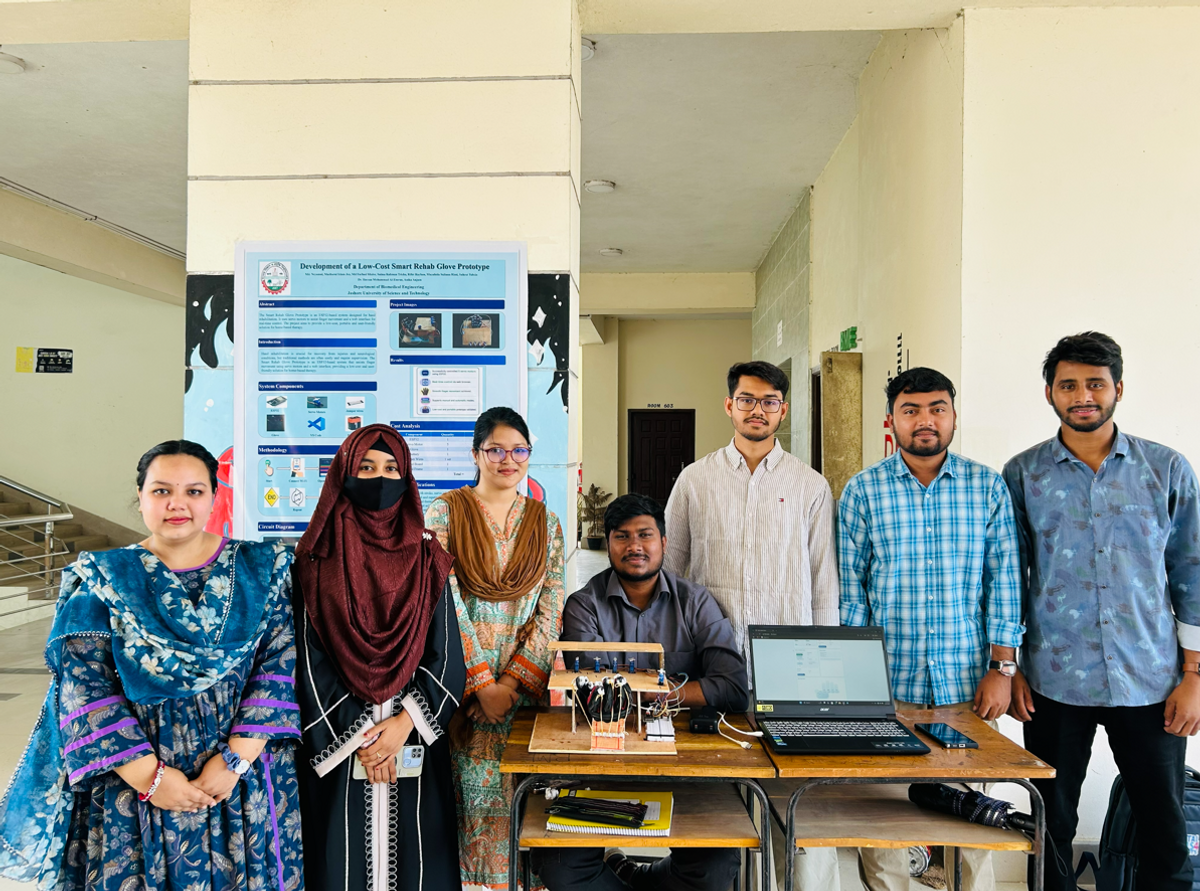
One group developed a SmartRehab Glove Prototype, a low-cost rehabilitation device aimed at supporting patients with impaired hand movement due to stroke, injury, or neurological conditions. The system is built using an ESP32 microcontroller and servo-driven actuation integrated into a wearable glove.
A browser-based control interface allows users or therapists to adjust therapy speed and duration through a smartphone or computer, eliminating the need for a dedicated application. The device performs controlled finger movements to assist in repetitive rehabilitation exercises.
This project demonstrates how embedded systems and communication protocols can be applied to create affordable, home-based rehabilitation solutions. Future improvements may include sensor integration (EMG, force, flex), adaptive therapy algorithms, and remote monitoring features.
Team Members:
Muzahida Sultana Rimi, Md. Neyamul, Mazharul Islam Joy, Suhrat Tahsin, Farhad Sikder, Saima Rahman Trisha, Rifat Rayhan
--------------------------------------------------------------------------------------------------------------
2. Tafseel-eNafs: Smart Telemedicine Platform for Underserved Communities
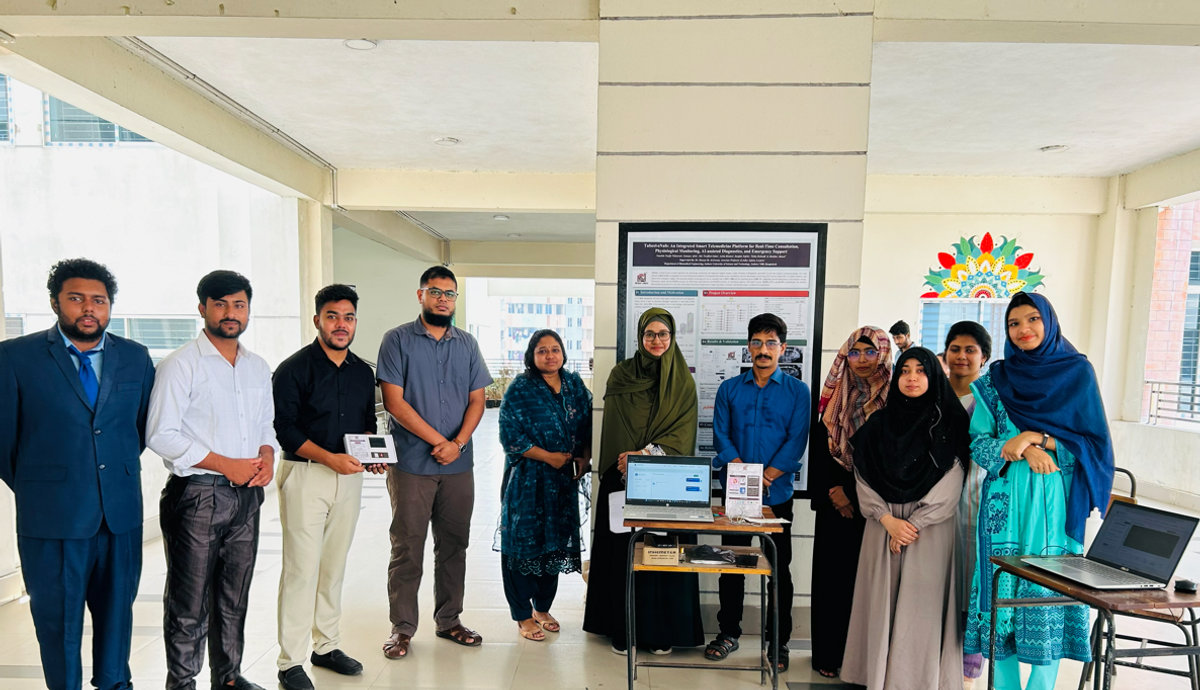
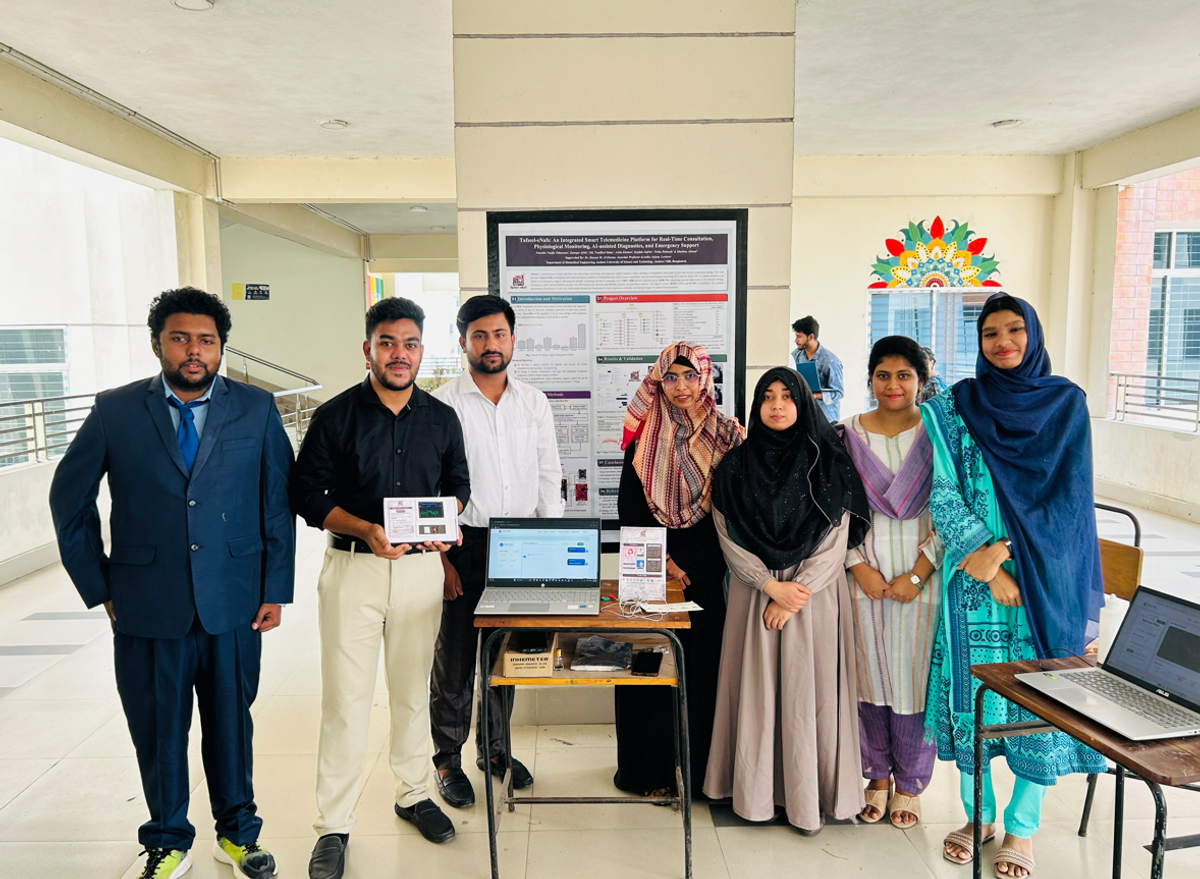
The third group developed Tafseel-eNafs, an integrated telemedicine platform aimed at addressing healthcare accessibility challenges in rural Bangladesh. The system allows patients to book appointments and consult doctors via real-time video and audio communication.
A key feature of the platform is its integration with a portable patient-monitoring device capable of transmitting vital parameters such as heart rate, oxygen saturation, temperature, and ECG data. The platform also incorporates AI-based diagnostic tools, including arrhythmia detection from ECG data and dental analysis from X-rays, achieving high accuracy rates.
Additionally, an AI-powered chatbot provides general health guidance and emergency support, while the system maintains a database of hospital and ambulance contacts across all 64 districts.
Designed with affordability and scalability in mind, this project showcases the potential of combining biomedical instrumentation, communication protocols, and artificial intelligence to create impactful healthcare solutions.
Team Members:
Noushin Nazifa Tabassum, Achia Khatun, Sumaya Afrin, Md. Towfikul Islam, Sanjida Zafrin, Tirtha Debnath, Shahbaz Ahmed
------------------------------------------------------------------------------------------------------------
3. Hospital Finder: AI-Powered Healthcare Access Platform
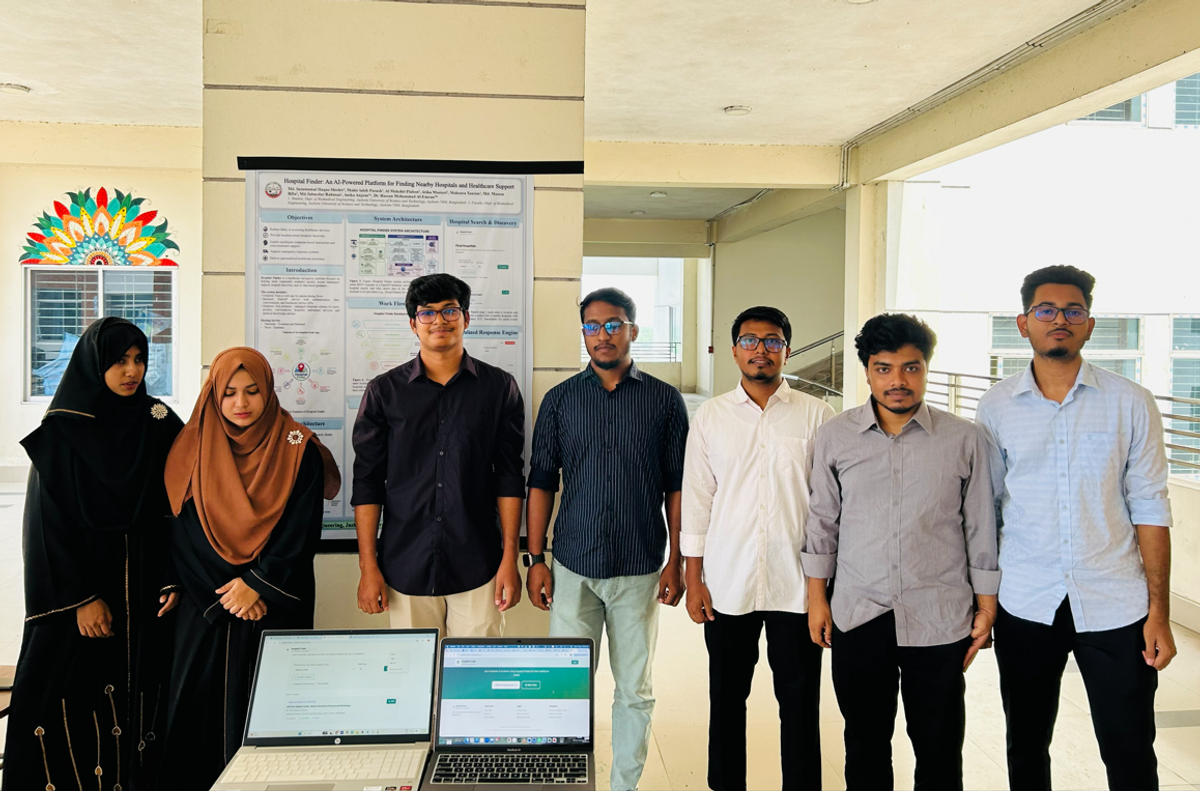
Another group presented Hospital Finder, a full-stack web platform designed to help users quickly locate nearby hospitals and access basic health guidance. The system combines location-based services with an AI-powered health assistant that provides symptom-based suggestions, first-aid advice, and recommendations on whether to seek medical attention.
The platform includes secure user accounts, saved health profiles, and conversation history, ensuring a personalized and reliable user experience. It performed smoothly during testing, demonstrating its practicality for real-world deployment.
This project emphasizes the role of communication systems and intelligent software in improving access to healthcare information, particularly in urban and semi-urban settings.
Team Members:
Md. Inzamamul Haque Shishir, Mahir Labib Parash, Al Mukshit Plabon, Atika Mustari, Maksura Tanzim, Md. Masum Billa, Md. Jubaedur Rahman